Your Guide to Cochrane’s
Must-Attend Events
Starts Here!
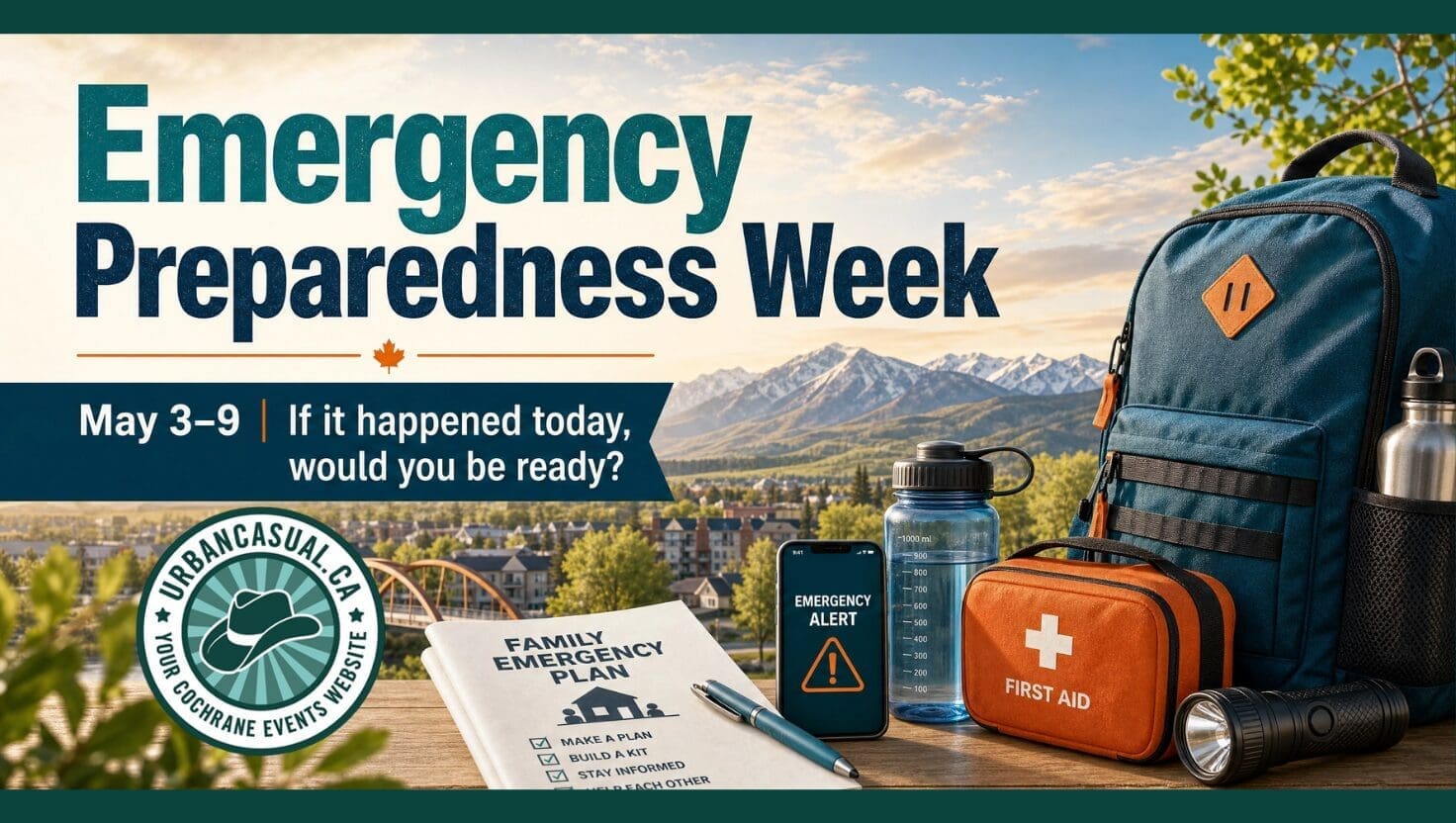
Emergency Preparedness Week runs from May 3 to 9, 2026 in Cochrane, and this year’s reminder is a practical one: if it happened today, would you be ready?
In the Cochrane and Calgary region, emergencies can take many forms. Wildfire smoke, grassfires, flooding, severe storms, power outages, winter weather and sudden evacuations can all disrupt daily life with little notice.
The Town of Cochrane is using Emergency Preparedness Week to encourage residents to focus on four questions:
Preparedness does not have to be complicated or expensive.
In fact, the Government of Alberta describes preparedness as a journey that can be built over time through small actions. Start with one task this week.
Download the Alberta Emergency Alert app and the Town of Cochrane App, then make sure your notifications are turned on. Alerts can provide critical instructions, evacuations notices and updates, when the minutes matter.
Make a household emergency plan.
This should include how your family will communicate if you are separated, where you will meet, who your out-of-town contact will be, and where you could stay if you have to leave home. The City of Calgary recommends having a pre-designated meeting place, at least two ways to exit your home, and a family reunion plan, noting that text message may go through even when the phone networks are overloaded.
Your plan should also reflect the people and pets in your household. Consider medications, mobility needs, young children, older adults, pets, service animals and anyone who may need extra support. If you live in a condo or apartment, learn your building’s evacuation procedures and know where the safety equipment is located.
Next… Build A 72-Hour Emergency Kit.
The 72-hour Emergency Kit is designed to help your household manage for at least three days if utilities, stores, roads, or services are disrupted. Calgary’s Emergency Preparedness Guide recommends 4 litres of water per person per day, along with non-perishable food, a manual can opener, medications, first aid supplies, a flashlight or radio, extra batteries or a wind-up charger, sanitation items, warm clothing, important documents and small bills or coins.
Know Your Neighbours.
Community connections matter when there is an emergency, so make sure you check-in with people who live alone, are new to the area, have limited mobility, or may not receive alerts easily.